A high-throughput, microvolume nanoparticle synthesis platform for lipid formulation screening and nucleic acid drug research: 8 samples synthesized in parallel per run, volumes as low as 60 μL per channel, and only 20–30 s per run — the tubing-free, zero-dead-volume design maximizes utilization of precious reagents.
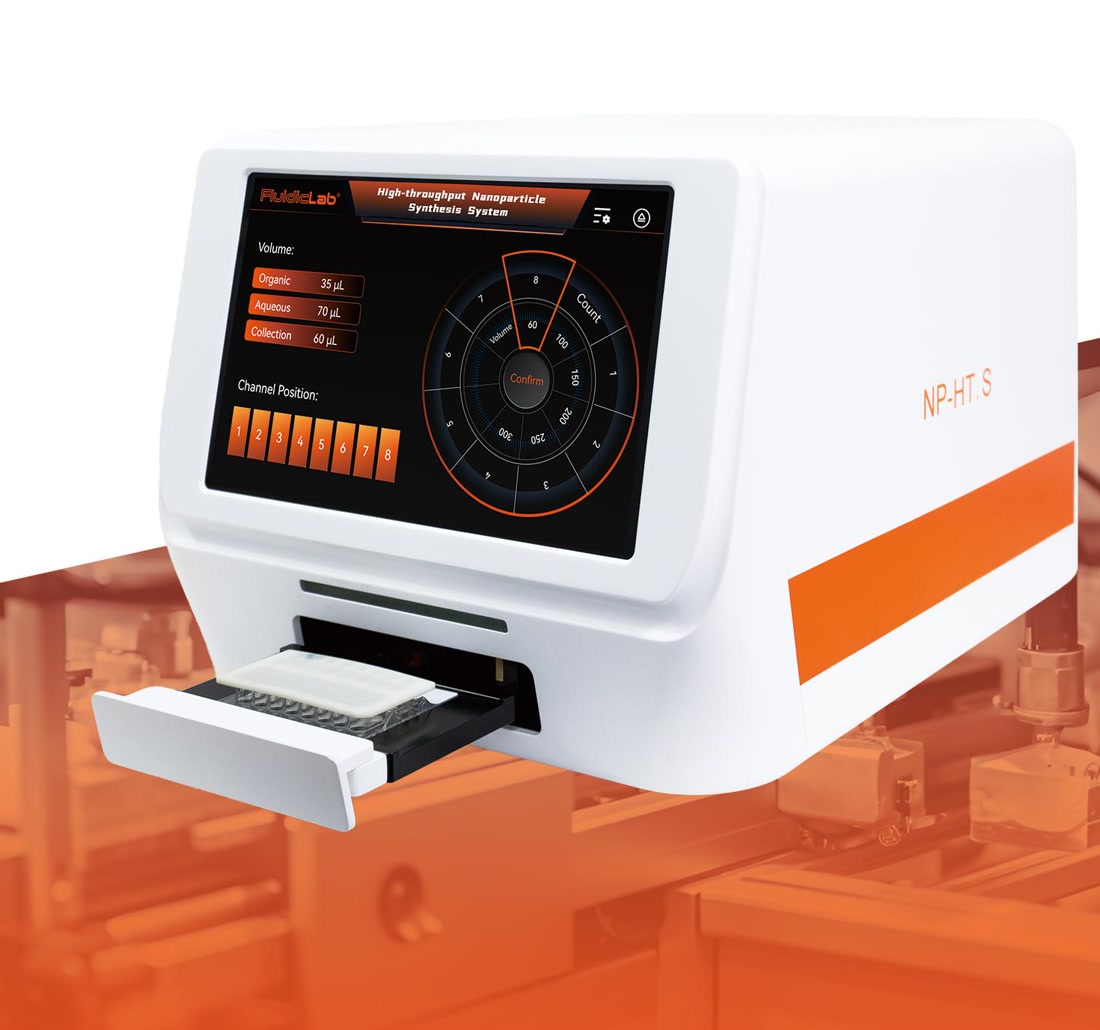
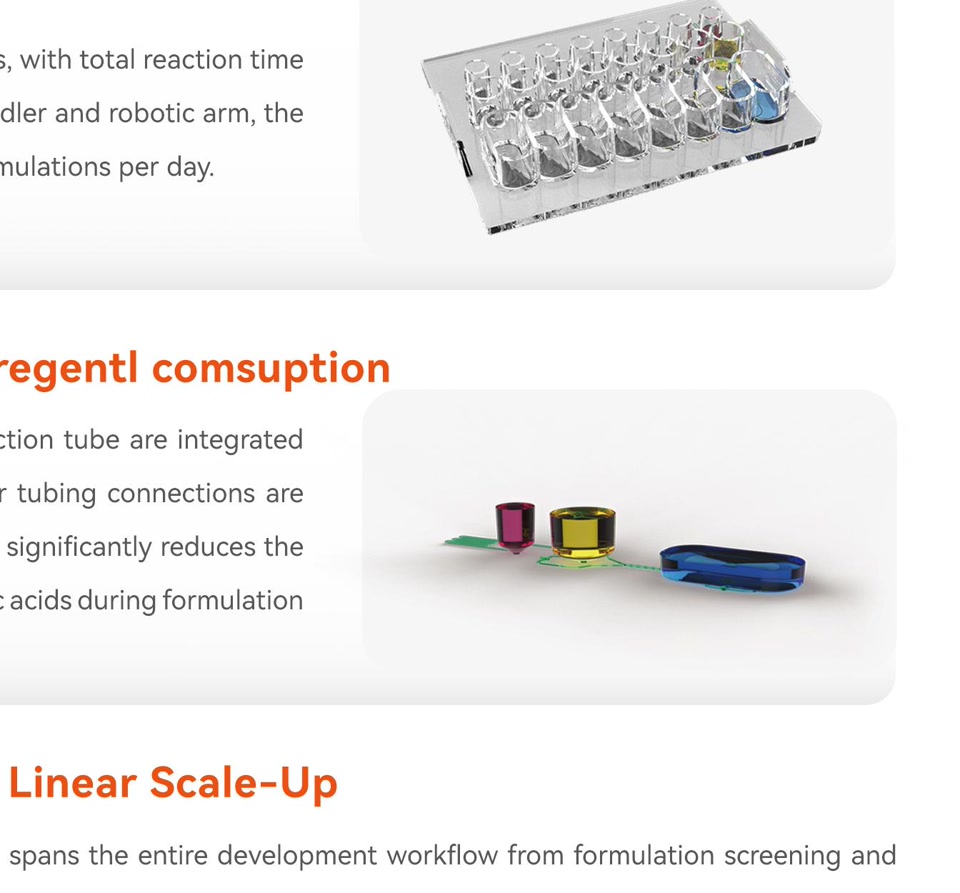
NP-HT.S carries an 8-channel microfluidic chip in which sample reservoirs, mixing structures and collection units are fully integrated — no external tubing, zero dead volume. Compact enough to fit inside a biosafety cabinet, it supports sterile operation and synthesis volumes down to 60 μL, delivering excellent batch-to-batch and channel-to-channel consistency while maximizing nucleic acid utilization — an efficient platform for LNP formulation screening, nucleic acid drug development and nanocarrier preparation.
Up to 8 samples synthesized in parallel per run with a total runtime of only 20–30 s — an order-of-magnitude boost for screening and sample preparation.
All parameters preconfigured for one-click operation — thousands of formulations can be tested in a day with liquid handlers and robotic arms.
Minimum particle size down to 45 nm with PDI ≤ 0.2 under standard formulations; highly consistent results across batches and channels.
Zero pre/post-run waste cuts lipid and nucleic acid consumption by up to ~95%, substantially reducing formulation screening costs.
Compatible with automated liquid-handling workstations and 6-axis robotic arms for 24-hour unattended operation.
The instrument fits inside a biosafety cabinet; EO-sterilized chips support aseptic preparation and GMP front-end workflows.
| Particle size range | 40 – 200 nm (down to 45 nm under standard formulations) |
|---|---|
| PDI | ≤ 0.2 |
| Per-channel synthesis volume | 60 – 300 μL |
| Per-run synthesis time | 20 – 30 s |
| Channels | 8 channels in parallel |
| Flow rate ratio (organic : aqueous) | 1 : 3 |
| On-board chip | EO-sterilized 8-channel baffle chip |
| Dimensions (L×W×H) | 415 × 330 × 300 mm |
|---|---|
| Chip identification | RFID auto-read of chip usage status; batch info recorded, fully traceable |
| Automation compatibility | Liquid-handling workstations / 6-axis robotic arms, 24 h unattended operation |
| Sterile operation | Instrument can be operated inside a biosafety cabinet (BSC) |
Sample reservoirs, mixing structures and collection tubes are fully integrated on the chip: no syringes, no external tubing, zero dead volume — eliminating cross-contamination and reagent waste at the source.
Measured results under standard formulations.
| Sample | Z-Average (nm) | PDI | EE (%) |
|---|---|---|---|
| Blank LNP | 41.95 | 0.056 | — |
| 1-mRNA-LNP | 53.59 | 0.132 | 86.49 |
| 2-mRNA-LNP | 52.74 | 0.134 | 91.22 |
| 3-mRNA-LNP | 54.52 | 0.183 | 91.37 |
| 4-mRNA-LNP | 53.34 | 0.147 | 89.40 |
| Volume | 60 μL | 120 μL | 180 μL | 240 μL | 300 μL |
|---|---|---|---|---|---|
| Z-Average (nm) | 39.72 | 40.78 | 41.95 | 42.96 | 39.24 |
| PDI | 0.034 | 0.062 | 0.083 | 0.096 | 0.073 |
Microvolume parallel synthesis to rapidly traverse the lipid composition space and lock in optimal LNP formulations.
Microvolume, sterile synthesis of drug-loaded LNPs that maximizes utilization of precious nucleic acid samples.
Batch production of uniform, consistent nanoparticle samples for DLS and other QC/characterization workflows.
Pair with liquid-handling workstations and robotic arms to build unattended drug-screening lines.
Parallel + microvolume + automated operation can shorten formulation development cycles by ~80%.
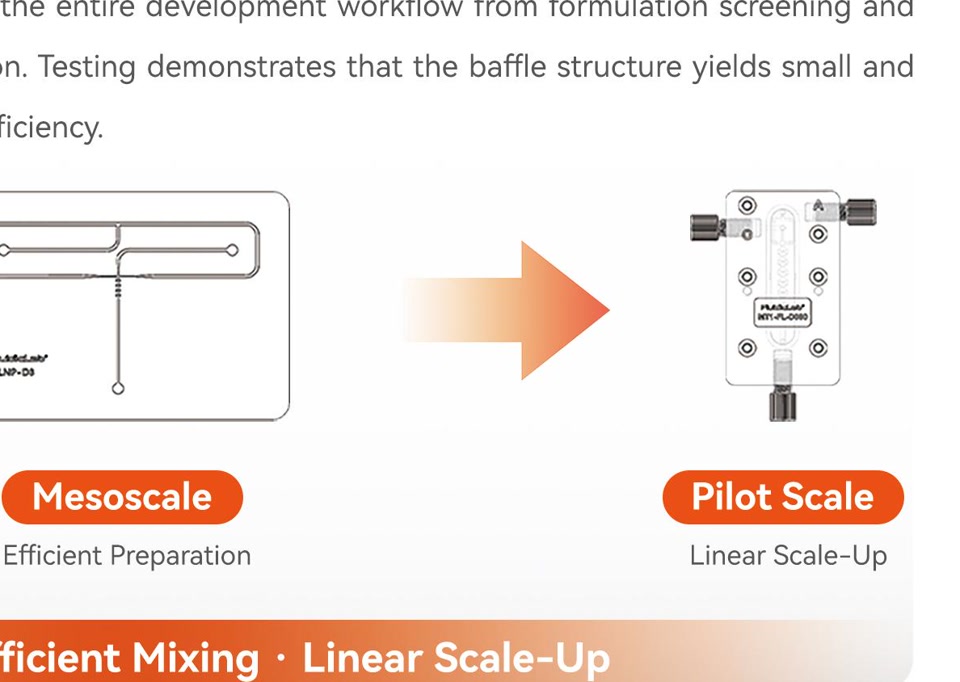
The same baffle mixing structure as NP-S2 / NP-M1 enables linear scale-up of screened formulations to pilot scale.
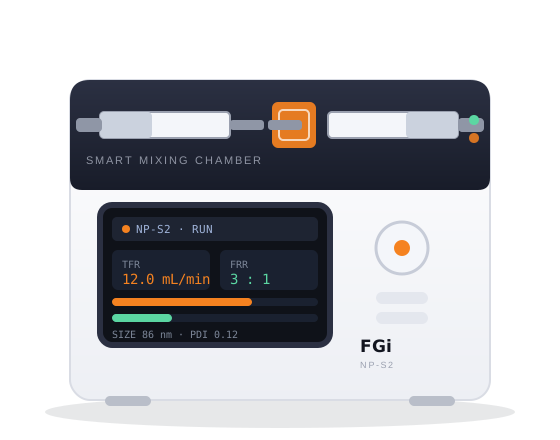
A flexible 0.4–40 mL preparation platform with touch-screen TFR/FRR control, supporting LNPs, liposomes, PLGA and more.
NP-S2 details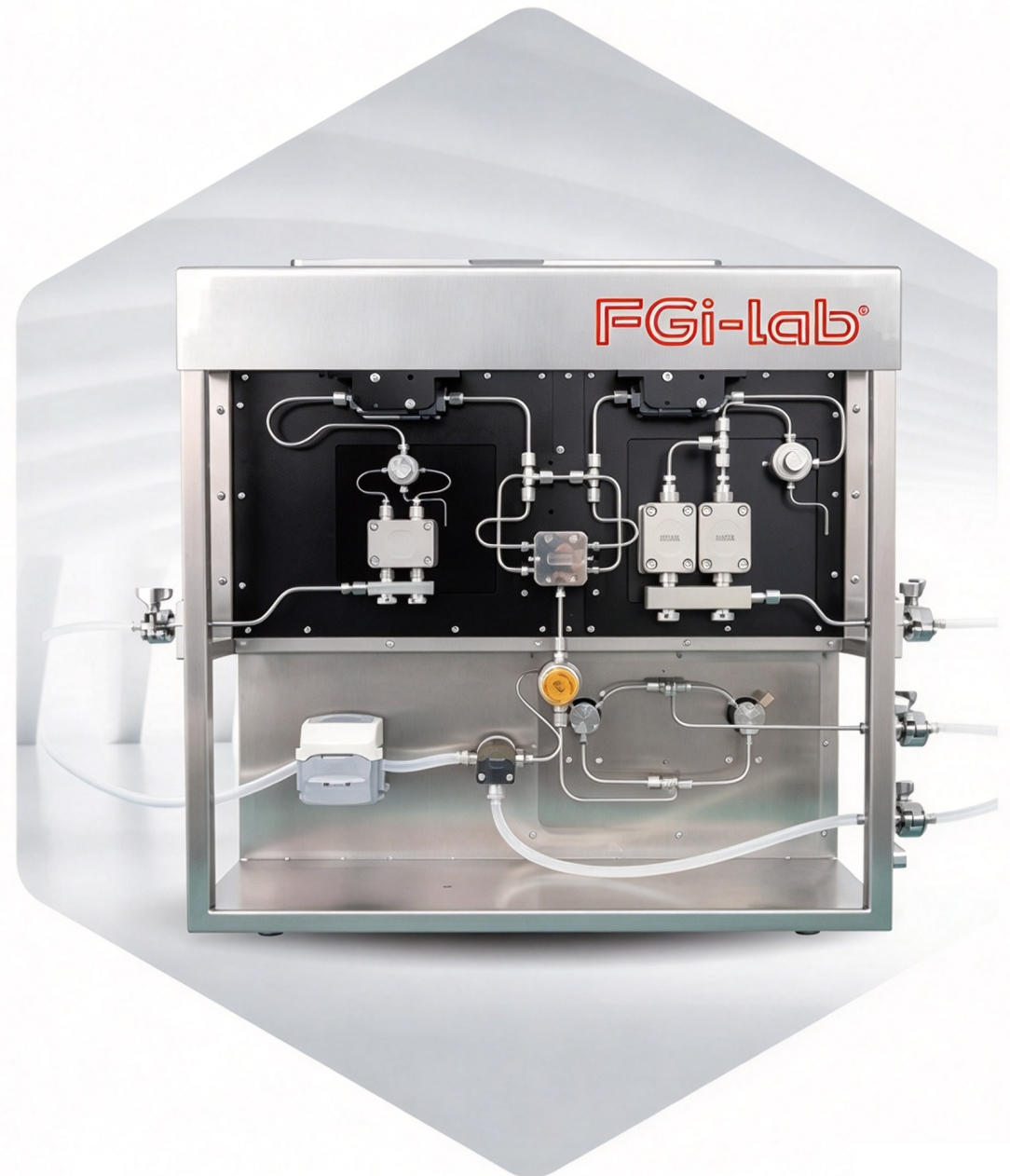
A 0–500 mL/min three-channel pilot platform compliant with 21 CFR Part 11, seamlessly scaling screened formulations to production.
NP-M1 detailsCall +86 21 5086 1716, or tell us your screening throughput and application.